Tesla roadster 2026: Amazing or Risky?
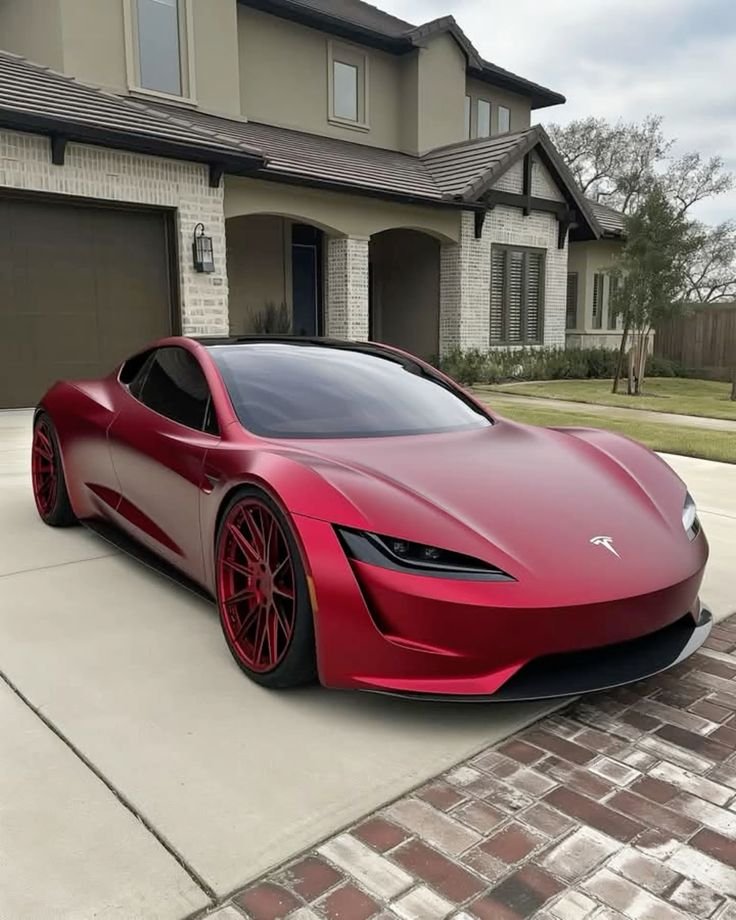
A custom render of the Tesla Roadster. Tesla has not shown the final production design.
Tesla roadster
Few cars have kept fans waiting as long as the Tesla Roadster. Elon Musk showed the second-generation car in 2017, and Tesla has promised it ever since. Now Tesla has confirmed a reveal event for October 1, 2026, in Waco, Texas.
This moment deserves a careful look. The Tesla Roadster makes some of the boldest claims in car history. It also leaves many questions open.
This guide covers the design, interior, performance, battery, technology, safety and price. It also separates official claims from details Tesla has not yet proved.
Tesla Roadster Design: Simple Shape, Strong Presence
The Roadster’s design relies on low, smooth lines. The nose sits close to the road, the roofline stays short, and the body flows without many sharp creases. It looks more like a modern supercar than a typical Tesla sedan.
Colour changes the mood a lot. Deep red, especially in a matte finish, gives the car an aggressive and expensive look. White or silver makes it feel cleaner and more futuristic.
Wheels play a big part too. Large, thin-spoke wheels fill the arches and make the car look wider and lower than it is.
Keep one point in mind: the 2017 design may not be the final one. Reports say the design has changed over the years, so the October reveal could look different. Treat every image you see today, including custom renders, as an idea and not a preview.
Tesla says the car has a removable glass roof. That gives it a convertible feel without a full folding roof, and it should keep the cabin bright on sunny days.
Tesla Roadster Interior: Built Around the Driver
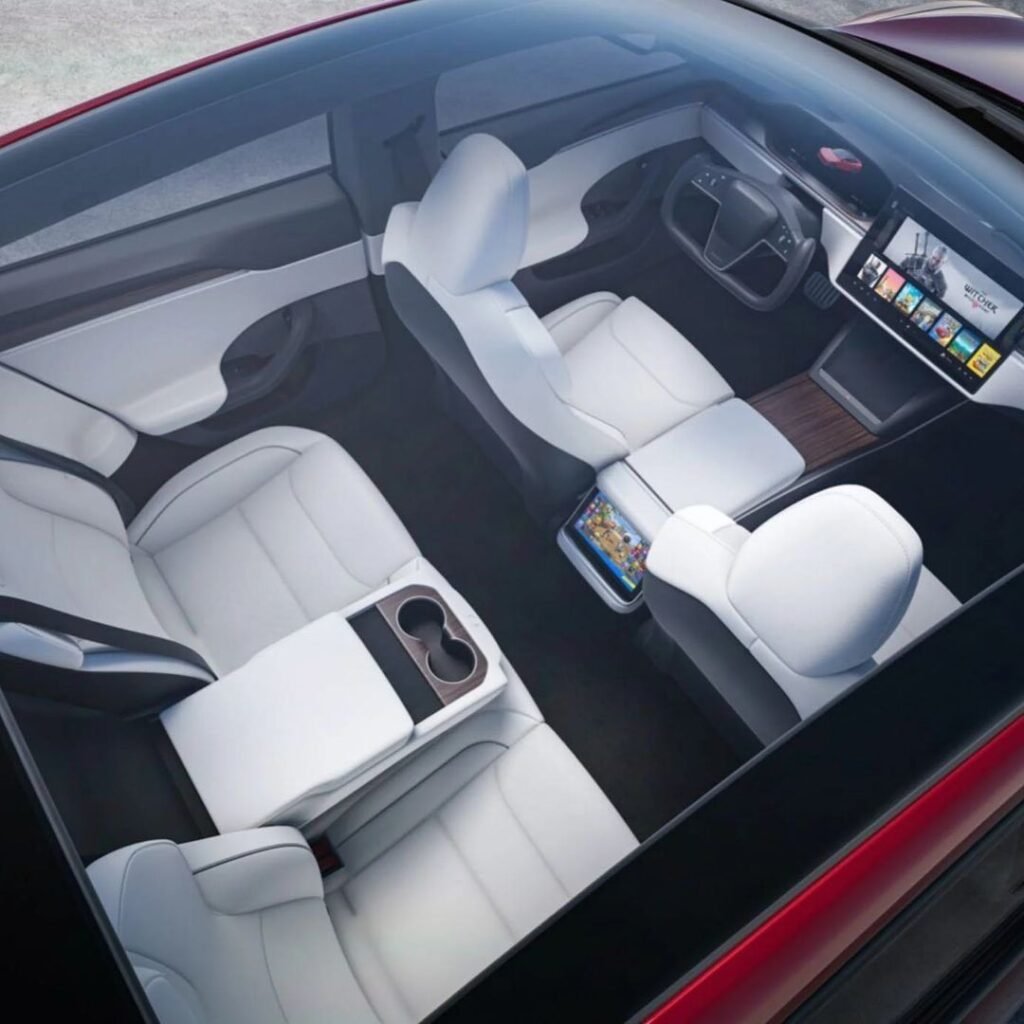
Tesla has never shied away from minimal cabins, and the Roadster will likely follow that approach. Expect fewer buttons, a bigger screen and a clean dashboard.
Tesla lists the car as a 2+2. That means two proper front seats and two small rear seats. Think of the rear seats as extra space for a bag or a child, not a place for adults on a long trip.
That layout still helps. Most two-seat sports cars force you to choose between a passenger and luggage. The Roadster’s extra space could make daily use easier.
Tesla has not shown the final materials, seat design, screen size or steering wheel layout. Until it does, anyone describing the cabin in detail is guessing.
Tesla Roadster Performance: Claims That Sound Unreal
Performance gives the Roadster its reputation. Tesla’s published targets include:
- 0–60 mph in 1.9 seconds
- A top speed above 250 mph
- Tri-motor all-wheel drive
Those figures would place the Roadster among the quickest road cars ever built. Many well-known sports cars need around three seconds to reach 60 mph.
Still, these are claims, not test results. No independent tester has driven the car, and the 2017 numbers came from a prototype. Real-world results depend on tyres, road surface, battery temperature and charge level.
Straight-line speed also tells only part of the story. Steering feel, braking, cooling and stability at speed matter just as much. A heavy electric car can win a drag race and still feel clumsy on a twisty road.
So the right question goes beyond “how fast is it?” Ask “how well can it repeat that speed?” Tesla needs to answer that at launch.
Tesla Roadster Battery, Range and Charging
Range is the other headline number. Tesla claims about 620 miles on a full charge. If that holds up, the Roadster would beat almost every electric car on sale today.
Here is the catch. Tesla has not confirmed the final battery size or charging speed for the redesigned car. Some websites mention a 200 kWh pack, but that number is an estimate based on the range target.
Range claims also depend on how the tester measures them. Official ratings usually run gentler than real driving. An electric car drains its battery quickly at high speed, so a car built for 250 mph will not deliver 620 miles when you drive it hard.
Charging raises the next question. Tesla’s Supercharger network gives the Roadster a real advantage, since owners should be able to use it. But nobody knows how fast a battery that large will charge.
Most owners will charge at home overnight. On long trips, fast-charging speed will decide whether the range figure feels useful.
The SpaceX Package Explained
The optional SpaceX package adds the most unusual chapter to the Roadster story. Musk has described it as a set of cold-gas thrusters that would help the car accelerate, brake and corner harder.
He has suggested it could cut 0–60 mph to about 1.1 seconds. No independent test backs that claim.
Reports around the October event suggest Tesla may demonstrate thrusters in some form. The same reports say the thruster version will probably not be street-legal.
That raises a fair question about how much of this technology will reach normal customers. It could become a show feature, a track option or a limited edition. Until Tesla explains the details, treat the SpaceX package as an exciting idea, not a buying decision.
Technology and Features
Software is Tesla’s biggest strength, and it will likely define the Roadster experience.
Expect a large central display, over-the-air updates and app-based controls. Owners can usually lock, unlock, precondition the cabin and track charging from their phones.
Driver assistance deserves a closer look. Tesla sells Autopilot and Full Self-Driving (Supervised) on its cars, but the company has not confirmed the same setup for the Roadster. Even where these systems exist, they need an attentive driver at all times.
Many buyers of a car like this care more about the drive than the assistance features. A sports car should feel connected and responsive. Tesla needs to show that its software does not dull the driving experience.
Safety: What We Can and Cannot Say
No official crash-test rating exists for the Roadster, because the production car does not exist yet. Any claim of a five-star rating would be invented.
We can say that Tesla cars have generally done well in crash tests, and that a heavy battery pack low in the body helps stability. But a low-volume supercar is a different case, and it may never face the same public testing as a family car.
Buyers should wait for the final safety equipment list. That includes airbags, braking systems and any driver-assistance hardware. A convertible-style roof also demands careful engineering, so listen closely to what Tesla explains at launch.
Tesla Roadster Price and Release Date
In 2017, Tesla announced a base price of $200,000. It listed a Founders Series at $250,000 and asked reservation holders for a large deposit.
Those numbers are old. Tesla has not published a final price for the redesigned car, and many analysts expect it to land above the original figure. Treat any price you read today as an estimate.
The same caution applies to the release date. October 1 marks the unveil, not the start of production or deliveries. Reports from earlier this year suggested production could start a year or more after the reveal, but Tesla has not confirmed a timeline.
Tesla also has a history of missing Roadster dates. Musk himself admitted that one earlier target gave him “deniability” if it slipped. That is a good reason to stay patient with any promise.
How the Roadster Compares With Its Rivals
The closest rivals are the fastest electric and hybrid supercars, not ordinary sports cars.
The Rimac Nevera is the obvious comparison. It has a reputation for extreme acceleration, but it costs well above $2 million. If the Roadster comes anywhere near its claims at a far lower price, it will make headlines.
The Porsche Taycan Turbo GT offers another useful benchmark. It shows how good a real, tested electric performance car can be today. It feels more practical and proven, though it does not promise the Roadster’s headline numbers.
That is the Roadster’s real challenge. It must beat the alternatives on paper, and it must also convince buyers that it is well built, reliable and enjoyable to drive.
Who Is the Tesla Roadster For?
Realistically, this car targets a small group of buyers. Reservation holders, collectors and Tesla fans will drive most of the demand.
It could also attract people who want supercar speed without the noise, fuel costs and complex servicing of a petrol engine. A 2+2 layout, home charging and over-the-air updates make it easier to live with than many exotic cars.
For everyone else, the Roadster matters as a preview. Tesla’s halo cars often shape the brand’s image and, over time, its technology.
Final Verdict
The Tesla Roadster is one of the most talked-about cars in the world, and one of the least proven. Its claims are huge, and its evidence is still limited.
October 1 should answer the key questions. Tesla needs to show a finished design, a real interior, a confirmed price and a believable production plan.
Until then, keep the approach simple. Enjoy the ambition, treat the numbers as targets, and wait for independent tests before you call any of it fact.

Thanks for the comment! CEER is clearly aiming for real electric performance with the Exobot, not just a comfort-focused EV. We’ll update the article as more official details come out. Thanks for reading!