Why Is My Check Engine Light On?7 Surprising Reasons
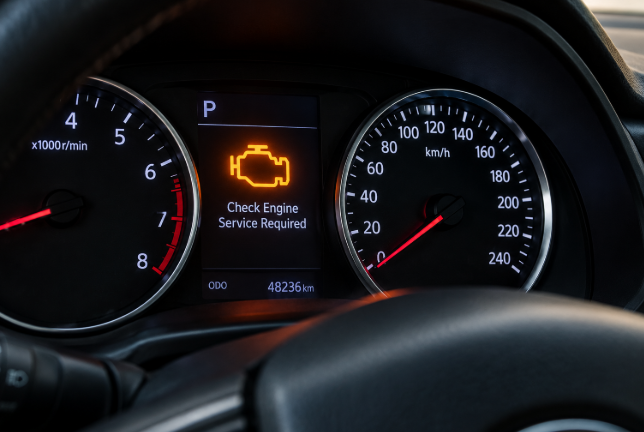
A driver notices the check engine warning light on her car dashboard.
Have you ever started your car and noticed the check engine light glowing on your dashboard? If you are wondering, “Why is my check engine light on?”, you are not alone. This warning light is one of the most common reasons drivers seek help from a mechanic.
The check engine light can appear because of something simple, such as a loose gas cap, or a more serious issue involving the engine, ignition system, or emissions equipment. However, the warning light alone cannot tell you exactly what is wrong with your vehicle.
Understanding the possible causes can help you decide what to do next, avoid unnecessary repairs, and protect your car from further damage. In this guide, we will explain seven common reasons the check engine light comes on, what different warning signs mean, and when you should seek professional help.
Why Is My Check Engine Light On?
Your check engine light is part of your car’s onboard diagnostic system. This system monitors different engine and emissions components to identify problems that may affect performance, fuel efficiency, or emissions.
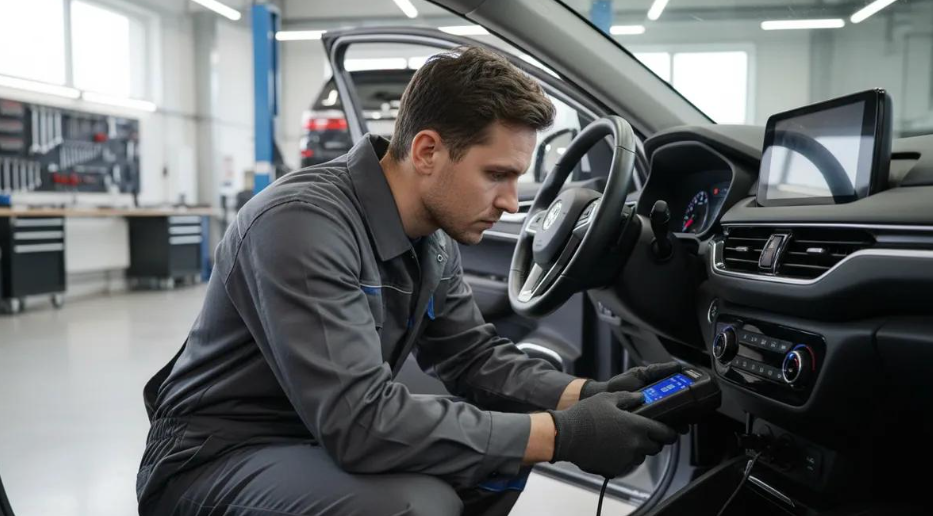
When the system detects an issue, it may store a diagnostic trouble code and illuminate the check engine light. A mechanic or driver with a compatible OBD-II scanner can retrieve that code to help identify the affected system.
In the United States, most passenger cars and light trucks manufactured for the 1996 model year and later support OBD-II diagnostics.
However, a warning light does not automatically mean your engine is failing. Some problems are relatively minor, while others require immediate attention.
The first thing to check is whether the light is steady or flashing. A steady light generally indicates that the system has detected a fault that needs diagnosis. A flashing light can indicate an active engine misfire that may damage the catalytic converter.
If the light flashes, especially when the engine shakes or loses power, reduce the load on the engine and pull over somewhere safe. Turn the engine off and arrange professional assistance rather than continuing to drive.
7 Common Reasons Your Check Engine Light Is On
Several problems can trigger this warning. The following are seven common possibilities, although the actual cause depends on your vehicle and its diagnostic codes.
1. A Loose or Damaged Gas Cap
A loose gas cap is one of the simplest possible reasons for a check engine light.
Modern vehicles use an evaporative emissions control system, commonly called the VAPE system, to prevent fuel vapors from escaping into the atmosphere. The gas cap helps maintain the system’s seal.
If the cap is loose, damaged, or missing, the system may detect a leak and turn on the warning light.
Common signs include:
- The check engine light appears after refueling.
- The car otherwise seems to run normally.
- You notice a damaged or poorly fitting gas cap.
What should you do?
If you have just refueled, park safely and check that the cap is fitted correctly. Replace it if it is damaged or cannot seal properly.
The light may take several driving cycles to turn off after the problem is corrected. If it remains illuminated, have the VAPE system checked. A loose cap is only one possible cause, so do not assume it is responsible without further diagnosis.
2. A Faulty Oxygen Sensor
An oxygen sensor measures the amount of oxygen in the exhaust. The engine computer uses this information to help control the air-fuel mixture and monitor emissions performance.
A failing sensor can cause the check engine light to appear. Depending on the fault, it may also contribute to increased fuel consumption or higher emissions.
Possible warning signs include:
- Reduced fuel efficiency.
- Increased exhaust emissions.
- An illuminated check engine light.
- Changes in engine performance in some cases.
Oxygen sensors can deteriorate over time, but other problems may produce similar symptoms or diagnostic codes.
What should you do?
A mechanic can read the stored codes and examine the sensor readings to determine whether the sensor has failed. Replacing an oxygen sensor without proper testing may waste money if the actual problem lies elsewhere.
3. Worn Spark Plugs or Faulty Ignition Coils
Spark plugs ignite the air-fuel mixture in gasoline engines. Ignition coils provide the electrical energy required to create that spark.
When spark plugs wear out or an ignition coil fails, the engine may misfire. A misfire occurs when one or more cylinders do not burn the mixture properly.
This problem can trigger the check engine light and affect how smoothly the car runs.
Look for these symptoms:
- Engine shaking or rough idling.
- Hesitation during acceleration.
- Reduced engine power.
- Difficulty starting the vehicle.
- A flashing check engine light in some cases.
A severe misfire can send unburned fuel into the exhaust system, potentially overheating and damaging the catalytic converter.
What should you do?
If the engine shakes noticeably or the light flashes, stop driving as soon as it is safe and arrange professional assistance. A mechanic can use diagnostic codes and additional tests to identify the affected cylinder or ignition component.
Replacing spark plugs or coils may solve the problem when they are confirmed to be faulty, but other causes of misfires must also be considered.
4. A Faulty Mass Airflow Sensor
The mass airflow sensor measures how much air enters the engine. The engine computer uses this measurement to calculate the appropriate amount of fuel.
If the sensor provides incorrect readings, the engine may not maintain the correct air-fuel mixture.
Common symptoms include:
- Rough idling.
- Poor acceleration.
- Reduced fuel economy.
- Hesitation when pressing the accelerator.
- An illuminated check engine light.
A dirty or contaminated sensor may sometimes contribute to the issue. However, wiring faults, air leaks, or a failing sensor can produce similar symptoms.
What should you do?
Have the intake system and sensor readings inspected. Cleaning may help in certain cases, but only use a cleaning product specifically approved for the sensor and follow the manufacturer’s instructions.
Do not replace the sensor simply because a diagnostic code points to the airflow system. Proper testing can help distinguish a faulty sensor from an underlying air leak or electrical problem.
5. A Vacuum Leak or Intake Air Leak
Engines rely on controlled airflow to operate properly. A damaged vacuum hose, leaking intake gasket, or loose connection can allow air to enter where the engine computer does not expect it.
This extra air can disrupt the air-fuel mixture and trigger a check engine light.
Possible symptoms include:
- Rough or unusually high idle speed.
- Hesitation during acceleration.
- Hissing sounds from the engine area.
- Poor fuel economy.
- Engine performance problems.
A vacuum leak may also cause diagnostic codes related to a lean air-fuel mixture.
What should you do?
A mechanic can inspect hoses, intake connections, and gaskets. Specialized leak-testing equipment may be needed to find the source.
Avoid spraying flammable liquids around a running engine to look for leaks. This can create a fire hazard. A proper inspection is safer and more reliable.
6. A Failing Catalytic Converter
The catalytic converter is part of the exhaust system. It helps reduce harmful pollutants produced by the engine.
When the converter stops working efficiently, the vehicle’s emissions monitoring system may illuminate the check engine light.
Potential warning signs include:
- Reduced engine performance.
- Poor fuel economy.
- An unusual exhaust smell.
- A warning light associated with catalytic converter efficiency.
Some catalytic converter problems produce few obvious symptoms at first. Others become noticeable as the problem progresses.
What should you do?
Have the exhaust and engine systems diagnosed before replacing the converter. Oxygen sensor faults, exhaust leaks, and engine misfires can sometimes contribute to similar diagnostic readings.
A failing converter may also be the result of another unresolved problem. If that underlying issue is not corrected, a replacement converter could be damaged again.
Because catalytic converter replacement can be expensive, accurate diagnosis is especially important.
7. An VAPE System Leak or Fault
The evaporative emissions control system prevents gasoline vapors from escaping from the fuel tank and fuel system.
A loose gas cap is one possible cause of an VAPE warning, but the system includes several other components, such as hoses, valves, and a vapor canister.
A leak or malfunction in one of these components may turn on the check engine light.
Common clues include:
- The light appears after refueling.
- The car runs normally despite the warning.
- An emissions-related diagnostic code is stored.
- The gas cap appears secure, but the warning remains.
What should you do?
A mechanic can inspect the fuel cap, VAPE hoses, valves, and other components. A smoke test may help locate a small leak that is difficult to see.
Do not replace VAPE parts based on the warning light alone. The diagnostic code and appropriate testing should guide the repair.
Why Is My Check Engine Light On but My Car Runs Fine?
If your car seems completely normal but the check engine light is on, it is understandable to wonder whether you can ignore it.
In some cases, the vehicle may have an emissions-related fault that does not noticeably affect how the engine runs. A loose gas cap, a small VAPE leak, or a sensor problem may trigger the light without causing an obvious change in performance.
However, a normal driving experience does not guarantee that the problem is harmless.
The vehicle’s computer may detect a fault before you notice any symptoms. Continuing to ignore the warning could allow a small problem to become more expensive.
Here is what you should do:
- Check whether the light is steady or flashing.
- Look for other warning lights or changes in engine performance.
- If the light is steady and the car runs normally, arrange a diagnostic check soon.
- If the light flashes, the engine shakes severely, or the car loses significant power, stop driving when safe and seek assistance.
A compatible OBD-II scanner can help identify the stored diagnostic trouble code. The code is a starting point for diagnosis, not automatic proof that a particular component needs replacement.
Why Is My Check Engine Light On and My Car Shaking?
A check engine light combined with engine shaking deserves more attention than a warning light with no other symptoms.
One possible cause is an engine misfire. This can result from faulty spark plugs, ignition coils, fuel delivery problems, or other engine issues.
A rough idle can also occur because of vacuum leaks, airflow problems, or mechanical faults.
Pay attention to the warning light:
- Steady light with mild shaking: Arrange prompt professional diagnosis and avoid unnecessary driving.
- Flashing light with shaking: Pull over safely, switch off the engine, and arrange roadside assistance.
- Severe shaking, smoke, overheating, or major power loss: Stop as soon as it is safe and do not continue driving.
Do not keep accelerating to test whether the shaking disappears. A serious misfire can damage the catalytic converter, and other engine faults can worsen if ignored.
Can You Drive With the Check Engine Light On?
Whether you can continue driving depends on the warning light, the vehicle’s behavior, and the underlying fault.
A steady check engine light with no unusual symptoms does not always require an immediate roadside stop. However, you should arrange a diagnostic check promptly and follow your vehicle manufacturer’s guidance.
A flashing light is more urgent because it can indicate a misfire that threatens the catalytic converter.
Stop driving as soon as it is safe if you notice:
- Severe engine shaking.
- Significant loss of power.
- Overheating.
- Smoke or a strong burning smell.
- An oil pressure warning or another critical warning.
If the engine is overheating or the oil pressure warning appears, do not keep driving simply because the check engine light is steady. Those symptoms require separate, urgent attention.
When in doubt, consult your owner’s manual or a qualified mechanic.
How to Diagnose a Check Engine Light
You do not need to guess the cause of a check engine light. A systematic diagnostic process can help identify the problem.
Step 1: Check the Warning Light
Determine whether the light is steady or flashing. Note any other warning lights and changes in engine behavior.
Step 2: Review Recent Events
Think about whether the light appeared after refueling, an oil change, recent repairs, or a battery replacement. This information may help the mechanic narrow down possible causes, although it does not confirm the fault.
Step 3: Read the Diagnostic Trouble Codes
A compatible OBD-II scanner can retrieve stored codes from most gasoline-powered cars and light trucks sold in the United States from model year 1996 onward.
The code may point to a particular system, such as ignition, airflow, or emissions control.
Step 4: Test the Suspected Component
A code should not automatically lead to replacing a part. A mechanic may need to check wiring, sensor readings, vacuum leaks, or other related components.
Step 5: Repair and Verify
After the confirmed problem is repaired, the mechanic can verify that the system operates correctly. The light may not turn off immediately, depending on the fault and vehicle.
Avoid clearing diagnostic codes before recording them. Doing so can erase useful information and make diagnosis more difficult.
How Much Does It Cost to Fix a Check Engine Light?
The cost depends on the underlying problem, the vehicle’s make and model, local labor rates, and the parts required.
A loose gas cap may require little or no expense if simply tightening it resolves the problem. A faulty sensor, ignition component, wiring issue, or catalytic converter problem may cost substantially more.
Before approving a repair, consider these steps:
- Ask for the diagnostic trouble codes and an explanation of the findings.
- Request an itemized estimate for parts and labor.
- Confirm whether additional testing is necessary.
- Ask whether the repair addresses the root cause or only a related symptom.
- Consider a second opinion for an expensive repair when practical.
There is no single repair price for every check engine light. A reliable estimate requires identifying the actual fault first.
Frequently Asked Questions
1. Can a loose gas cap turn on the check engine light?
Yes. A loose, damaged, or missing gas cap can cause an evaporative emissions leak and trigger the warning light. However, other VAPE system faults can produce similar symptoms.
2. Will the check engine light turn off by itself?
Sometimes. After the underlying issue is corrected, the system may need several successful driving cycles before the light turns off. Persistent warnings should be diagnosed rather than ignored.
3. Can I check the engine light without a scanner?
You can inspect the warning light, check the gas cap, and note unusual symptoms, but these steps cannot reliably identify every fault. An OBD-II scanner can retrieve diagnostic codes to guide further testing.
4. Why is my check engine light on after an oil change?
The light may appear because of an unrelated fault, a disturbed electrical connection, or an issue that occurred during the service. If the oil pressure warning also appears, or the engine makes unusual noises, stop the engine and seek professional help.
5. Why is my check engine light on after getting gas?
A loose or damaged gas cap is one possibility. An VAPE system fault may also be responsible. Check that the cap is properly secured, then arrange diagnosis if the warning persists.
6. Can a weak battery cause the check engine light to come on?
Low voltage or electrical problems can sometimes trigger diagnostic faults. However, a check engine light should not automatically be blamed on the battery. The stored codes and electrical system should be checked.
7. Does a check engine light always mean an expensive repair?
No. Some causes are relatively simple, while others require major repairs. The best way to avoid unnecessary expenses is to diagnose the problem before replacing parts.
Final Verdict
If you are asking, “Why is my check engine light on?”, the answer depends on what your car’s diagnostic system has detected.
A loose gas cap, faulty oxygen sensor, worn spark plugs, airflow problem, vacuum leak, catalytic converter issue, or VAPE system fault can all be possible causes.
Start by checking whether the light is steady or flashing and paying attention to any changes in your car’s performance. If the warning persists, use a compatible OBD-II scanner or consult a qualified mechanic to identify the actual problem.
Most importantly, do not ignore a flashing check engine light or serious symptoms such as engine shaking, overheating, or major power loss. Timely diagnosis can help protect your vehicle, avoid further damage, and make repairs more manageable.
For more practical automotive advice, maintenance guides, and helpful car information, keep exploring CarsGallery.online.
why is my check engine light on, check engine light, check engine warning, engine warning light, check engine light causes, OBD2 scanner, engine misfire, oxygen sensor, loose gas cap, catalytic converter, mass airflow sensor, vacuum leak, EVAP system, car maintenance, engine diagnostics, car repair, dashboard warning lights, car troubleshooting, automotive maintenance, check engine light flashing
#CarMaintenance #CheckEngineLight #CarRepair #AutomotiveTips #CarCare #EngineDiagnostics #OBD2 #CarTroubleshooting #VehicleMaintenance #AutoRepair #CarTips #EngineWarning #OxygenSensor #CatalyticConverter #FuelEfficiency #MechanicTips #CarProblems #AutomotiveAdvice #CarsGallery #AutoMaintenance