Hyundai Tucson XRT Pro 2027: Bold Power
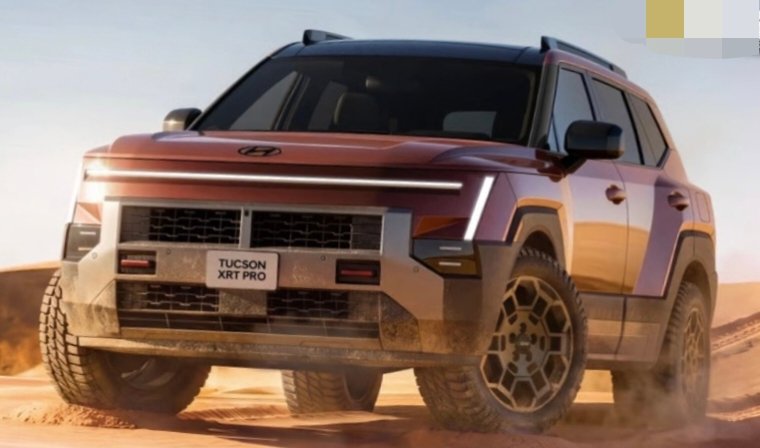
Hyundai Tucson XRT Pro
The Hyundai Tucson XRT Pro brings a tougher personality to Hyundai’s redesigned compact SUV. Hyundai officially unveiled the fifth-generation Tucson on October 1, 2026. Alongside the standard model, Hyundai introduced the XRT PRO as the most adventure-focused version of the new lineup.
The new Tucson follows Hyundai’s “Art of Steel” design philosophy. As a result, it looks wider, sharper, and more muscular than the outgoing model. However, the XRT PRO goes a step further with off-road-focused hardware, all-terrain tires, increased ground clearance, and all-wheel drive.
At the same time, Hyundai has completely reworked the cabin. The new interior combines modern technology with simple controls and practical storage. It also introduces the Pleos Connect infotainment system and Gleo AI.
Therefore, the new Tucson is not only about aggressive styling. It aims to offer comfort for daily driving and extra capability for weekend adventures.
Hyundai Tucson XRT Pro Design
The Hyundai Tucson XRT Pro 2027 has a strong and upright appearance. Its new body uses muscular fenders, sharp lines, and a wider stance. These changes give the SUV a more confident road presence.
The front end is one of its biggest highlights. Hyundai introduces new H-Edge lighting across the redesigned Tucson. The lighting combines center and edge illumination to create a wider visual signature.
Furthermore, the XRT PRO adds darker exterior details. Its larger cladding package gives the lower body a more rugged appearance. Hyundai also uses forged-carbon-inspired patterns around the wheel arches and lower sections.
The XRT PRO receives bold wheels wrapped in all-terrain tires. These tires support its adventure-focused character. They also make the SUV look more capable on rough surfaces.
The new Tucson has also grown in size. The long-wheelbase version measures 4,700 mm in length, 1,905 mm in width, and 1,685 mm in height. Its wheelbase reaches 2,785 mm.
Compared with the previous generation, the new model is 60 mm longer, 40 mm wider, and 20 mm taller. The wheelbase also increases by 30 mm.
As a result, the larger body creates more road presence and additional interior space.
The rear design follows the same modern approach. Hyundai uses sculptural Prism Rear Lamps to create a distinctive three-dimensional appearance. Available Micro Pixel Lighting can also use 25,600 individual LED pixels for advanced lighting functions.
Overall, the XRT PRO looks much more adventurous than a typical compact crossover. Its design clearly communicates that it is built for drivers who want something tougher.
Hyundai Tucson XRT Pro Off-Road Capability
The Hyundai Tucson XRT Pro 2027 focuses heavily on off-road capability. Hyundai has added hardware that goes beyond simple appearance upgrades.
First, the XRT PRO comes with all-wheel drive. It also uses all-terrain tires and aggressive approach and departure angles.
Ground clearance is another major advantage. The standard Tucson offers 180 mm of ground clearance. The XRT PRO increases that figure to 210 mm.
That 30 mm increase creates more space beneath the SUV. Therefore, drivers have more clearance when crossing uneven surfaces.
Hyundai also adds front recovery hooks. These are useful for outdoor driving situations where recovery equipment may be needed.
The XRT PRO also receives expanded lower-body cladding. This helps protect the lower sections of the vehicle while strengthening its rugged appearance.
However, the biggest technology upgrade is Smart Terrain Assist.
Smart Terrain Assist
Smart Terrain Assist is Hyundai’s first system of its type. It analyzes traction and wheel-slip conditions to estimate terrain difficulty.
The system then provides a visual “stuck score.” It uses green, orange, or red indicators to show the level of difficulty.
In addition, the system can support assisted low-speed off-road driving. Target Speed Control can manage acceleration and braking at speeds between 2 and 25 km/h, allowing the driver to focus more on steering.
Hyundai also offers advanced off-road technologies such as Ground View Monitor in selected configurations. This system can improve visibility around the vehicle when terrain becomes difficult to judge.
These features give the XRT PRO more substance than a simple appearance package.
Hyundai Tucson XRT Pro Engine and Performance
The Hyundai Tucson XRT Pro 2027 belongs to a wider Tucson lineup with gasoline, hybrid, and plug-in hybrid powertrains. However, availability varies by market and trim.
For the North American lineup, the gasoline Tucson uses a 1.6-liter turbocharged engine. Hyundai lists an output of 184 hp and 27.0 kgf·m of torque. The gasoline engine works with an eight-speed automatic transmission in the published U.S. specification.
The next-generation hybrid system is more powerful. It produces 233 hp in the U.S. specification.
Hyundai targets up to 42 mpg for the North American two-wheel-drive hybrid with 17-inch wheels. Actual fuel economy can vary according to configuration and driving conditions.
The hybrid also targets a 0–60 mph time of 8.5 seconds. Therefore, it offers a useful balance between efficiency and everyday performance.
Hyundai has also developed a new E-Traction system for its hybrid models. It manages driving torque to help reduce wheel slip during cornering. Consequently, the system can improve stability and control.
Another useful feature is HEV Stay Mode. It allows the vehicle to operate functions such as air conditioning, heating, audio, and device charging while the engine remains off.
This feature can be especially useful during outdoor stops. It also gives the cabin a quieter, more EV-like experience.
Plug-In Hybrid Power
Hyundai will also offer a plug-in hybrid Tucson in selected markets.
The PHEV combines a 1.6-liter turbocharged engine with an electric system. Hyundai lists a total output of 292 PS and 38.7 kgf·m of torque.
The plug-in hybrid also has an estimated electric-only range of 81 km, or about 50 miles. Its 7.2-kW onboard charger supports charging at home or public charging locations.
However, the PHEV is not confirmed for every market. Therefore, buyers should check local availability before assuming that this powertrain will be offered with the XRT PRO.
Interior and Comfort
Inside, the new Hyundai Tucson XRT Pro takes a more modern approach. Hyundai designed the cabin around comfort, visibility, and simple controls.
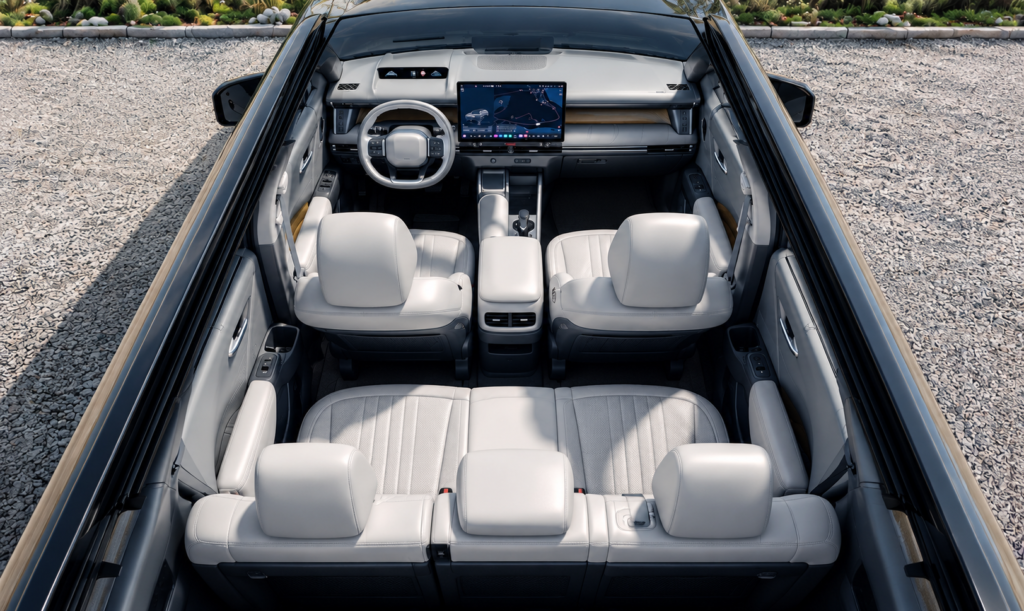
The dashboard uses a two-layer design. The upper section creates a clean horizontal appearance. Meanwhile, the lower section provides an open storage area.
The XRT PRO adds dark-metal interior finishes and XRT-exclusive seat patterns. These details continue the rugged theme from the exterior.
The cabin also offers plenty of space. The long-wheelbase Tucson provides 1,036 mm of front headroom and 1,064 mm of rear legroom. It can seat five occupants.
Cargo space reaches 41.7 cubic feet under Hyundai’s listed SAE measurement. Therefore, the Tucson remains practical for luggage, shopping, and outdoor equipment.
Hyundai also improves access to the cabin. The rear doors now open to an angle of 83 degrees. This makes entry and exit easier, especially in tight situations.
The steering column now houses the shift-by-wire gear selector. This removes the traditional center-console shifter and creates more usable space.
Furthermore, Hyundai keeps physical controls for frequently used functions. HVAC and audio controls remain easy to access without requiring drivers to navigate through multiple touchscreen menus.
Depending on the market and configuration, the new Tucson can also offer premium comfort features. These include Ergo Motion Seats and Relaxation Comfort Seats on selected versions.
The available dual wireless charging pads can provide 15W charging. USB-C charging is also available for compatible devices.
Therefore, the cabin does not feel like a purely rugged SUV interior. Instead, it combines adventure-focused styling with everyday comfort.
Technology and Pleos Connect
Technology is one of the biggest changes in the new Tucson.
Hyundai introduces Pleos Connect, an Android Automotive OS-based infotainment system. Depending on the configuration, the system uses either a 12.9-inch or 17-inch main touchscreen.
A slim 9.9-inch display also sits within the dashboard layout.
The system supports three-finger gesture controls and a single-screen mode. These features aim to make the interface easier to use while reducing unnecessary screen interaction.
However, the most interesting addition is Gleo AI.
Gleo AI works as an in-vehicle conversational assistant. It can understand natural language and use context to respond to requests.
For example, a driver can make a conversational request instead of manually searching through several menus.
Pleos Connect can also support third-party entertainment and productivity services. In addition, Hyundai plans to use over-the-air updates to keep the system updated.
This gives the Hyundai Tucson XRT Pro a more connected digital experience. More importantly, the technology does not completely replace physical controls.
That combination should make the cabin easier to use during everyday driving.
Safety Features
Safety remains an important part of the new Tucson.
Hyundai uses hot-stamped high-strength steel in important areas of the body. The company also reinforces the center pillars to improve structural strength.
The Tucson receives an advanced airbag system. Depending on configuration, it can include front, front-side, rear-side, center-side, and full-length curtain airbags.
Hyundai also introduces an In-Cabin Monitoring Unit. It monitors driver eye activity and signs of drowsiness. If the system detects fatigue, it can provide an alert.
Child Presence Detection and Rear Occupant Alert provide additional protection. These systems can warn the driver if children or pets remain inside the vehicle.
The new Tucson also offers several driver-assistance technologies.
Intelligent Speed Limit Assist can recognize speed-limit information. Navigation-Linked Smart Cruise Control can use navigation data to prepare for upcoming curves, intersections, roundabouts, and speed bumps.
Selected versions can also offer advanced systems such as Lane Following Assist and Emergency Stop functions.
However, equipment can vary by market and trim. Therefore, the final local specification should always be checked before purchase.
Wheels and Exterior Details
The new Tucson offers several wheel sizes across its lineup. Hyundai lists 17-, 18-, 19-, and 20-inch wheel options.
The maximum listed tire size is 235/50R20.
The XRT PRO focuses more heavily on all-terrain capability. Its rugged wheel design and all-terrain tires support its off-road purpose.
The increased ground clearance also changes the vehicle’s stance. The SUV sits higher and looks more prepared for rough terrain.
Meanwhile, the darker exterior elements create a stronger contrast with the bodywork.
The combination works especially well with the new angular design. The result is a compact SUV that looks more adventurous without becoming overly complicated.
Hyundai Tucson XRT Pro 2027 Price and Availability
Hyundai has not officially announced the price of the XRT PRO at the time of its global reveal.
Therefore, it would be inaccurate to publish an exact MSRP as confirmed information.
Hyundai has confirmed that the new Tucson will launch in Korea later in 2026. North America, Europe, and other global markets will follow in 2027.
For the United States, Hyundai says the all-new Tucson and Tucson Hybrid will launch in early 2027.
The official U.S. website currently highlights the Tucson Hybrid XRT PRO. However, Hyundai also warns that the vehicles shown may use non-U.S. preproduction specifications and optional features.
As a result, equipment can differ between countries.
The final price will likely depend on the market, powertrain, trim level, and available equipment. Until Hyundai publishes official pricing, any exact figure should be treated as unofficial.
Final Verdict
The Hyundai Tucson XRT Pro 2027 gives the redesigned Tucson a much stronger personality.
Its exterior looks bold and muscular. More importantly, the XRT PRO adds genuine hardware for outdoor driving.
The 210 mm ground clearance, all-terrain tires, all-wheel drive, recovery hooks, and off-road assistance systems make it more capable than a standard road-focused crossover.
At the same time, the SUV remains practical for everyday use. Its spacious cabin, large cargo area, comfortable seats, modern infotainment, and advanced safety technology give it broad appeal.
The hybrid system also adds an important efficiency advantage. Hyundai targets up to 42 mpg for the specified North American 2WD hybrid configuration. The 233-hp hybrid system should also provide enough performance for normal daily driving.
Technology gives the Tucson another advantage. Pleos Connect, Gleo AI, wireless charging, and over-the-air updates bring the SUV into a more connected era.
Still, buyers should remember that specifications and features can change by market. Hyundai has not announced every regional detail or the official XRT PRO price yet.
Overall, the new XRT PRO looks like a strong choice for drivers who want one compact SUV for city driving, road trips, and occasional off-road adventures.
It combines rugged design with modern technology and practical everyday comfort. Therefore, the Hyundai Tucson XRT Pro 2027 could become one of the most interesting adventure-focused compact SUVs of the new model year.