BMW M8 Competition: Powerful V8 Performance
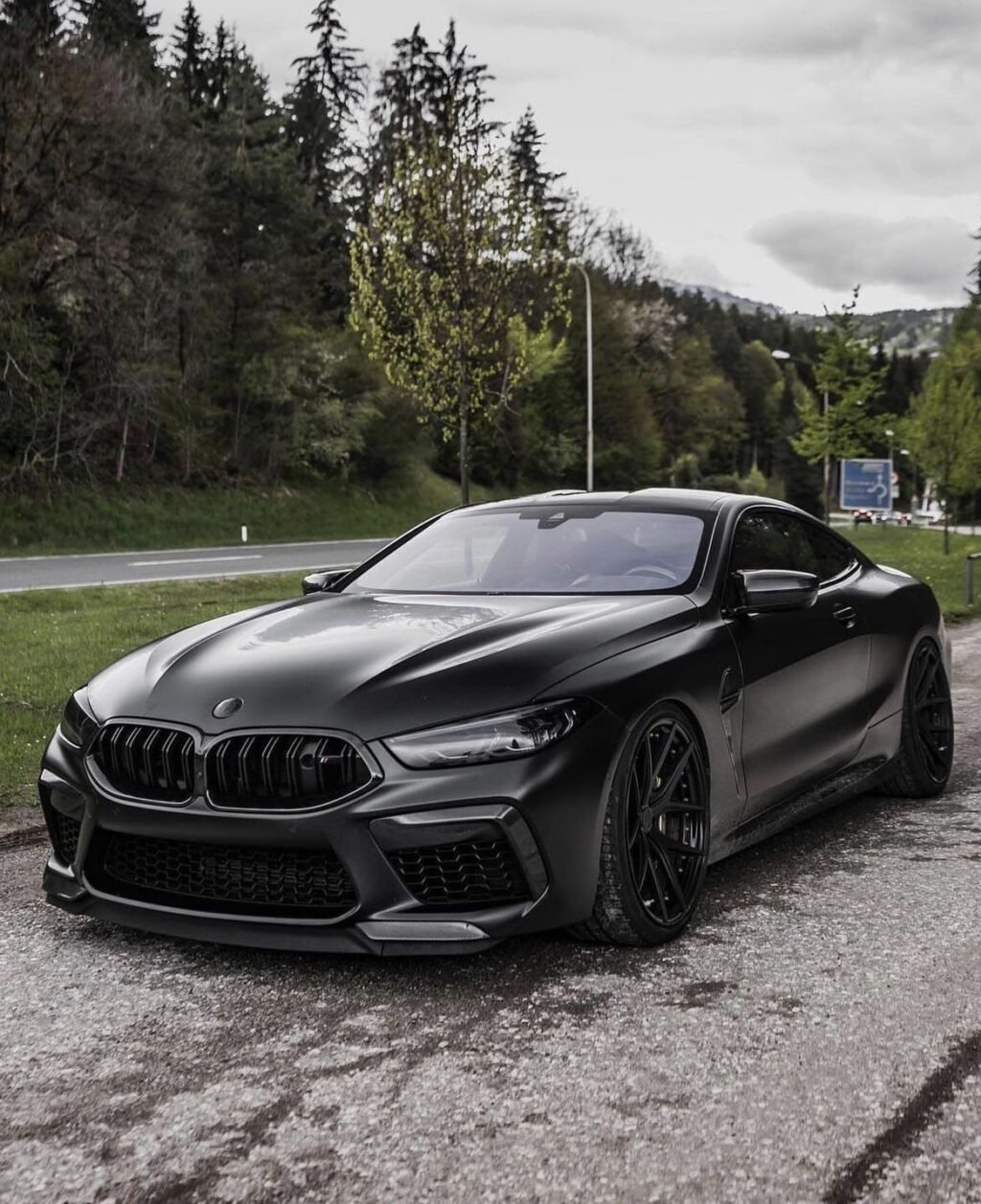
BMW M8 Competition
The BMW M8 Competition is a performance-focused luxury car that combines the comfort of a grand tourer with the character of a serious M model. It takes the elegant foundation of the BMW 8 Series and adds a powerful V8 engine, advanced chassis technology and an M xDrive all-wheel-drive system.
The result is a car that looks sophisticated but has the performance to match its aggressive appearance. The wide stance, sharp headlights, large kidney grille and sculpted bodywork give the M8 a strong road presence. The green example shown here takes that design even further with dark exterior details and an aggressive aerodynamic appearance.
Under the hood, the M8 Competition uses a 4.4-liter M TwinPower Turbo V8 producing 625 hp and 750 Nm of torque. Power reaches the road through an eight-speed M Steptronic transmission and M xDrive. BMW quotes a 0–100 km/h time of 3.2 seconds for the Coupé.
BMW M8 Competition Design
The BMW M8 Competition has a design that immediately separates it from a regular luxury coupe. Its low roofline, wide body and muscular proportions create a planted appearance, while the M-specific details give it a more purposeful character.
At the front, the large kidney grille dominates the face. Slim headlights sit on either side, giving the car a sharp expression. The lower bumper features large air openings that contribute to the car’s aggressive appearance while supporting the cooling requirements of a high-performance powertrain.
The hood has deep sculpted lines that guide the eye toward the grille. In the featured image, the darker hood section and additional vent-style details make the front end look even more dramatic. Some exterior elements visible in this particular car may be optional or customized, so they should not automatically be treated as standard equipment.
From the side, the wide wheel arches give the car a strong stance. Large M light-alloy wheels, performance tires and M-specific mirror designs add to the sporty character.
The rear continues the same theme with a pronounced diffuser, spoiler lip and quad exhaust outlets. Together, these details make the car look lower, wider and more focused.
BMW also offered different exterior colors and styling options, allowing owners to personalize the car. The 2022 update introduced new paint choices and 20-inch M light-alloy wheels, along with additional exterior options.
BMW M8 Competition Interior
Inside, the BMW M8 Competition blends luxury with a driver-focused atmosphere. Instead of creating a cabin that feels like a stripped-down race car, BMW retained the premium character expected from an 8 Series model.
The front seats provide strong lateral support, which becomes useful during enthusiastic driving. At the same time, premium leather and Alcantara finishes can give the cabin a more luxurious appearance. BMW offered full Merino leather and Alcantara combinations, while M Carbon bucket seats were available on applicable configurations.
The driver sits in a cockpit designed around easy access to the car’s performance controls. M-specific buttons allow the driver to configure different vehicle settings without navigating through complicated menus.
The updated model also received a larger 12.3-inch central display. This screen handles infotainment functions and gives the driver access to navigation, media and vehicle information.
The cabin’s biggest advantage is its versatility. It can feel comfortable during everyday driving, yet the driver can quickly change the car’s settings when a more focused experience is desired.
That balance makes the M8 more practical as a grand tourer than a dedicated track machine. It has enough luxury and technology for long journeys while keeping the performance-focused identity of BMW M.
BMW M8 Competition Engine
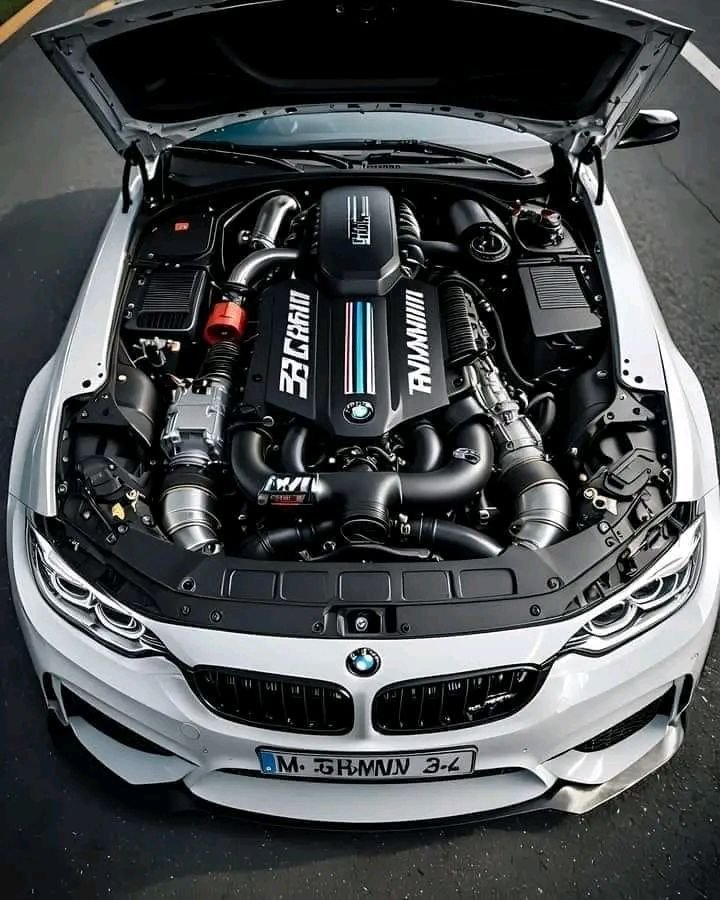
The heart of the BMW M8 Competition is a 4.4-liter V8 featuring M TwinPower Turbo technology. It develops 625 hp at 6,000 rpm and 750 Nm of torque. BMW lists the engine displacement at 4,395 cc.
The engine uses two turbochargers positioned between the cylinder banks. BMW also developed the cooling and oil supply systems with high-performance driving in mind.
This engine is not only about peak horsepower. Its strong torque delivery helps the car respond quickly when the driver presses the accelerator. BMW states that the 750 Nm of torque is available across a broad rev range, giving the car strong acceleration without requiring the driver to constantly chase the highest engine speed.
Another interesting engineering detail is the specially developed engine mounting. BMW increased the rigidity of the mounting to create a more direct connection between the engine and vehicle structure. This helps improve engine response and contributes to sharper reactions from the car.
The V8 is paired with an eight-speed M Steptronic transmission with Drivelogic. The transmission can change its behavior according to the selected setup, giving the driver greater control over how quickly and aggressively it shifts.
Performance and Acceleration
Performance is one of the biggest reasons the BMW M8 Competition attracts attention. The Coupé can accelerate from 0 to 100 km/h in 3.2 seconds, while the Convertible takes 3.3 seconds. The Gran Coupé also achieves 3.2 seconds in Competition specification.
BMW lists a standard electronically limited top speed of 250 km/h. With the optional M Driver’s Package, the limit can rise to 305 km/h.
However, straight-line speed is only part of the story. BMW developed the M8’s chassis with attention to steering response, body control and high-speed stability.
The suspension system works together with the car’s electronic controls to provide different driving characteristics. A more comfortable setup can make everyday journeys easier, while sportier settings sharpen the car’s responses.
BMW also used experience from motorsport development when tuning the M8 platform. The company tested the car at demanding proving grounds and racetracks, including the Nürburgring-Nordschleife.
This development approach helps explain why the M8 feels different from a standard luxury coupe.
M xDrive and Drivetrain
The M xDrive system is one of the most important parts of the BMW M8 Competition driving experience. Instead of using a conventional all-wheel-drive setup, BMW designed the system with a rear-biased character.
During normal performance driving, the system can use all four wheels to improve traction. When the rear tires can handle the available power, the system maintains its rear-focused character. When additional traction is needed, power can be sent toward the front wheels.
This approach gives the driver confidence when accelerating while preserving the feel associated with BMW M cars.
On applicable versions, the system provides different drive modes, including 4WD and 4WD Sport. Certain configurations also allow a 2WD setting that sends power exclusively to the rear wheels.
The Active M Differential also works with the drivetrain to help manage traction between the rear wheels. Together, these systems give the driver more control over how the car behaves.
BMW M8 Competition Chassis
A powerful engine needs an equally capable chassis. The BMW M8 Competition uses model-specific suspension and chassis technology designed to control its substantial power.
Adaptive M suspension allows the damping characteristics to change according to the selected driving mode. This means the car can be more comfortable during normal road use and more controlled when the driver chooses a sportier setting.
BMW also worked on the steering system to provide a direct response. The goal is to make the car feel predictable when the driver changes direction at higher speeds.
Body rigidity is another important part of the package. A strong structure gives the suspension a better foundation and helps the car maintain its composure during demanding driving.
These changes may not be as visually obvious as the grille or wheels, but they are essential to the M8’s character. The car’s performance comes from the complete package rather than the engine alone.
Wheels, Tires and Brakes
The wheels of the BMW M8 Competition are more than styling accessories. They are an important part of the car’s performance package.
BMW offered 20-inch M light-alloy wheels on the updated Competition models. Their large dimensions fill the wheel arches and provide space for the car’s substantial braking hardware.
High-performance tires are equally important because they provide the connection between the car and the road. With 625 hp available, traction becomes a major factor during hard acceleration and cornering.
The braking system is designed to handle the demands created by the M8’s speed and weight. BMW also integrates the brake system into its M setup controls, allowing the driver to configure different vehicle characteristics.
Carbon-ceramic brakes were also available as an option in relevant markets. Their resistance to heat can be particularly useful during repeated hard braking, although availability depends on specification.
The featured car’s aggressive front-end styling makes the wheels, tires and brakes look especially prominent. Exact wheel designs and brake finishes can vary according to model year and optional equipment.
Technology and Infotainment
Modern technology plays a major role in the BMW M8 Competition experience. BMW updated the car with a larger 12.3-inch central display, improving access to infotainment and vehicle functions.
The digital interface can provide navigation, media controls and information about the vehicle. Depending on specification, features such as BMW Live Cockpit Professional, smartphone connectivity and a Head-Up Display are also available.
The Head-Up Display is particularly useful in a performance-focused vehicle. It can place important information in the driver’s line of sight, reducing the need to look down at the instrument cluster.
BMW also integrates performance settings into the digital system. Through the Setup menu, drivers can adjust the engine, transmission, steering, suspension, M xDrive and braking characteristics.
This makes the technology more than a collection of entertainment features. It becomes part of the car’s driving personality.
M MODE and Driving Settings
The BMW M8 Competition gives drivers significant control over the level of electronic assistance. BMW’s M MODE system can change how driver-assistance systems behave and how information is presented on the displays.
ROAD mode provides the full range of electronic assistance functions. SPORT changes the intervention behavior and focuses more strongly on the driving experience.
This flexibility is useful because not every journey requires the same setup.
For example, a driver commuting through traffic may prefer a more relaxed configuration. On an open road, a sportier setup can make the car feel more responsive.
The important point is that the M8 does not force the driver into one personality. Its electronics allow the character of the vehicle to be adjusted according to the situation.
Safety and Driver Assistance
A car capable of reaching high speeds also needs technology that supports everyday driving. The M8 was offered with various driver-assistance and parking features, although the exact equipment depends on the market and model year.
Parking assistance and camera-based systems can be especially useful because the car has a wide body and a long footprint. These features can make maneuvering in tight spaces easier.
The M MODE system also gives the driver control over the level of electronic intervention. In its more road-focused settings, the car can provide a broader range of assistance.
However, driver-assistance technology is designed to support the driver rather than replace attention behind the wheel. The driver remains responsible for controlling the vehicle and responding to road conditions.
BMW M8 Competition Body Styles
BMW offered the BMW M8 Competition in three main body styles: Coupé, Convertible and Gran Coupé.
The Coupé is the traditional performance version. Its fixed roof and two-door layout give it the classic shape associated with a high-performance luxury coupe.
The Convertible adds open-top driving while keeping the same basic V8 powertrain. Its 0–100 km/h time is 3.3 seconds, compared with 3.2 seconds for the Coupé.
The Gran Coupé takes a more practical approach. Its four-door layout provides additional access to the rear seats while keeping the performance-focused character of the M8 family.
This variety is one of the interesting aspects of the M8 lineup. Buyers could choose between traditional coupe styling, open-air driving or additional practicality without leaving the M8 family.
Fuel Economy and Everyday Ownership
Performance is clearly the priority, so fuel economy is not the strongest area of the BMW M8 Competition.
Official consumption figures vary according to model year, body style, wheels, tires and testing standard. For the updated 2022 models, BMW published combined WLTP figures of approximately 11.4–11.0 L/100 km for the Coupé and 11.6–11.2 L/100 km for the Convertible and Gran Coupé.
Real-world fuel consumption can be different. Traffic, weather, road conditions and driving style all affect how much fuel the V8 uses.
Maintenance is another factor potential owners should consider. A high-performance BMW contains more complex components than an ordinary family car, including the turbocharged V8, performance transmission, adaptive suspension and advanced electronics.
For a used M8, service history is therefore extremely important. Buyers should pay attention to maintenance records, previous repairs, tire condition, brake condition and any aftermarket modifications.
BMW M8 Competition Price
The original price of the BMW M8 Competition depended on the market and body style.
For example, BMW’s 2022 UK pricing listed the M8 Competition Coupé at £125,800, while the Gran Coupé started at £123,300. The Convertible was priced higher at £132,800. These figures were new-car prices for that market and model year, not current used-car values.
BMW also published market-specific pricing in other countries, so there is no single worldwide price for this car.
For buyers in markets where the M8 is imported, taxes, duties, registration charges and currency exchange rates can significantly change the final cost.
Used prices can vary even more. Mileage, accident history, service records, ownership history, options and modifications all influence the value of an individual car.
Therefore, anyone considering a used M8 should evaluate the condition and history of the specific vehicle rather than relying on an old launch price.
Is the BMW M8 Competition Practical?
Despite its performance, the BMW M8 Competition can still work as a luxury grand tourer.
The Coupé provides a comfortable front cabin, premium materials and modern technology. The Gran Coupé adds four doors and greater practicality, making it a more natural choice for someone who regularly carries passengers.
The car is also equipped with a range of comfort and convenience features depending on specification. This makes it different from a lightweight sports car that sacrifices everyday usability for performance.
However, its size and powerful V8 mean it is not the most economical choice for daily commuting. Owners also need to consider the cost of premium fuel, tires, brakes and performance-oriented maintenance.
The M8 makes the most sense for someone who values both luxury and serious performance rather than looking purely for practicality.
Why the M8 Competition Still Stands Out
The BMW M8 Competition has a unique position within BMW’s performance range because it combines several characteristics in one package.
It has the size and comfort of a luxury grand tourer, the performance of a serious sports car and the technology of a modern BMW.
Its 625-hp V8 provides the headline numbers, but the rest of the engineering is just as important. M xDrive, the Active M Differential, adaptive suspension, performance brakes and configurable driving modes all contribute to the car’s overall character.
The result is a car that does not rely on horsepower alone. BMW created a complete performance system around the engine.
That is also why the M8 remains interesting to enthusiasts. It can cruise comfortably when needed, yet it has the hardware to deliver extremely rapid acceleration when the driver wants more.
Final Thoughts
The BMW M8 Competition is a powerful combination of luxury, technology and M performance. Its 4.4-liter twin-turbo V8 produces 625 hp and 750 Nm, while the eight-speed M Steptronic transmission and M xDrive system help put that power onto the road.
Its design is equally memorable. The large kidney grille, sculpted hood, wide body, M wheels and quad exhaust outlets give it an unmistakable presence. The green example shown in this article adds an even more aggressive personality with its dark details and performance-inspired appearance.
Inside, the car takes a more refined approach. Premium materials, supportive seats, digital technology and configurable M controls create a cabin that can serve both everyday journeys and performance driving.
The M8 family also offered three body styles, giving buyers the choice between the traditional Coupé, open-top Convertible and more practical Gran Coupé.
Ultimately, the BMW M8 Competition succeeds because it does not focus on just one quality. It combines a powerful V8, sophisticated drivetrain technology, luxury equipment and an adjustable chassis in one package.
For enthusiasts who want the comfort of a premium grand tourer without giving up serious performance, the M8 Competition remains one of BMW’s most distinctive M cars.

Thanks for your feedback! The Pajero’s off-road reputation is well earned, and the Super Select 4WD-II system is a big part of it. We’re glad you enjoyed the article.