Toyota Camry: Powerful Performance Meets Stunning Efficiency
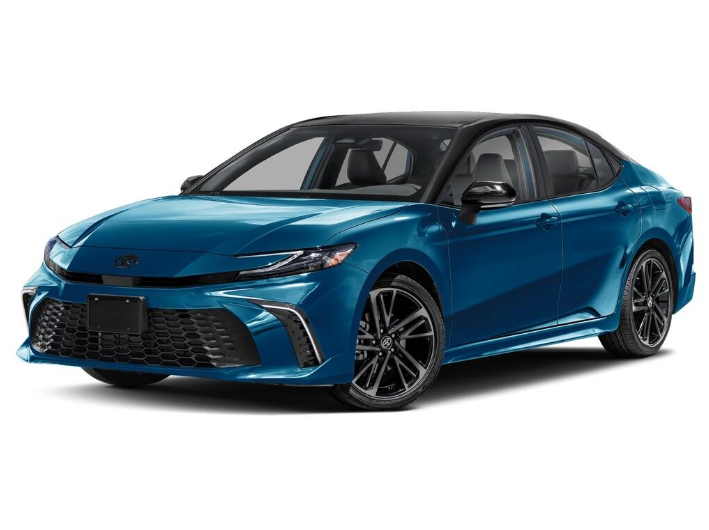
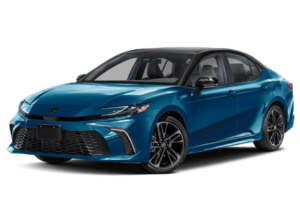
The Toyota Camry combines sleek exterior styling with an athletic sedan profile.
The Toyota Camry continues to prove that a family sedan can deliver impressive performance, modern styling, and excellent fuel economy in one well-rounded package. For drivers who want a comfortable daily car without giving up responsive acceleration or advanced technology, the Camry remains a compelling option. Its latest generation combines a hybrid powertrain with a refined cabin, modern safety systems, and a sporty exterior that gives this sedan a fresh identity.
For 2027, Toyota continues its all-hybrid approach in the U.S. market, offering front-wheel drive (FWD) and available all-wheel drive (AWD). The lineup includes five grades: LE, SE, Nightshade, XLE, and XSE. The announced starting U.S. MSRP is $29,700, excluding dealer processing and handling fees.
Rather than focusing on power alone, the Camry aims to balance everyday driving comfort with fuel-saving technology. This combination makes it worth considering for commuters, families, and drivers who spend plenty of time on the road.
Toyota Camry: A Bold Exterior That Commands Attention
The Toyota Camry has adopted a sharper, more athletic appearance than the traditional family sedans many drivers remember. Its low front profile, sculpted bodywork, and distinctive lighting give it a confident road presence without making the design unnecessarily complicated.
At the front, the sleek headlight design works with the wide grille and sculpted bumper to create a modern appearance. The exact details vary by trim, allowing buyers to choose between a more understated look and a sportier personality.
The side profile features flowing lines and a gently sloping roofline. These details help the sedan look dynamic while retaining the practical shape expected from a midsize four-door car. Alloy wheel designs also vary across the lineup, adding another visual distinction between grades.
At the rear, carefully shaped taillights and a clean trunk design complete the exterior. Sport-oriented versions such as the SE and XSE offer a more aggressive character, while other trims focus on a refined, sophisticated appearance.
Overall, the Camry’s styling appeals to buyers who want a practical sedan that still looks modern and distinctive.
Toyota Camry: Hybrid Performance With Impressive Power
Performance is a major part of the Toyota Camry’s appeal, but its engineering is designed to balance power with efficiency. Every 2027 U.S.-market model uses Toyota’s hybrid system, combining a 2.5-liter four-cylinder gasoline engine with electric-motor assistance.
Key Performance Specifications
- Engine: 2.5-liter four-cylinder hybrid system
- Front-wheel-drive output: 225 net combined horsepower
- All-wheel-drive output: 232 net combined horsepower
- Transmission: Electronically controlled continuously variable transmission (eCVT)
- Drive options: Front-wheel drive or available all-wheel drive
The hybrid system coordinates the gasoline engine and electric motors to deliver smooth, responsive acceleration. Electric assistance can help the car move away from a stop and support acceleration when additional power is needed.
The result is a driving experience designed for everyday traffic, highway merging, and longer journeys. The Camry is not a dedicated high-performance sports sedan, but its combined power output gives it useful performance for its intended role.
Drivers can also benefit from the available AWD system. It uses an electric motor at the rear axle to provide additional traction when driving conditions call for it. This can be particularly helpful on slippery roads, although appropriate tires and careful driving remain essential.
For buyers seeking a balance between usable power and reasonable running costs, the Camry’s hybrid setup offers a practical middle ground.
Toyota Camry: Stunning Efficiency That Saves Fuel
Fuel economy is one of the strongest reasons to consider the Toyota Camry. By combining a gasoline engine with electric motors and regenerative braking, the hybrid system can reduce fuel consumption compared with many conventional gasoline-powered sedans.
Toyota estimates that the 2027 Camry LE with front-wheel drive achieves up to 51 mpg combined under U.S. testing standards. Other trims and AWD versions have different ratings, depending on their equipment and configuration.
For everyday owners, strong fuel economy can mean fewer visits to the gas station and lower fuel expenses over time. The benefit can be especially noticeable for commuters who regularly travel through busy urban areas, where a hybrid system can recover energy during braking and use electric assistance at low speeds.
However, actual mileage depends on several factors, including driving habits, traffic, weather, tire pressure, road conditions, and air-conditioning use. Buyers should therefore treat the advertised figure as an estimate rather than a guaranteed result.
The Camry’s efficiency does not require owners to plug it into a charger. Its hybrid battery is charged through the vehicle’s own system, including regenerative braking and the gasoline engine when needed.
That makes it a convenient choice for drivers who want hybrid benefits without changing their usual refueling routine.
A Comfortable and Premium Interior
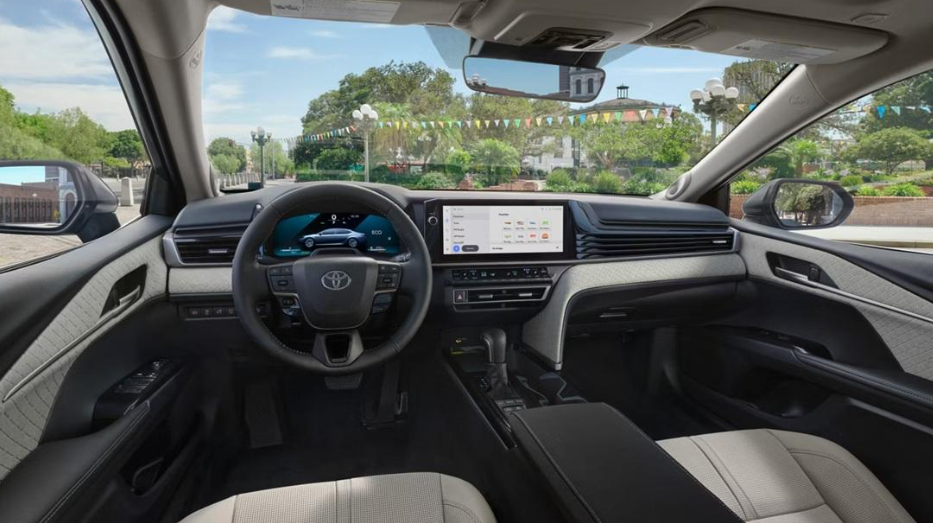
Inside, the Toyota Camry focuses on comfort, useful technology, and a driver-friendly layout. Its cabin is designed to support daily commuting while remaining comfortable enough for longer road trips.
The dashboard features a modern design with a central infotainment display and clearly arranged controls. Depending on the trim and equipment, buyers can get different screen configurations, upgraded materials, and additional convenience features.
The seating layout accommodates five occupants. Front passengers benefit from a practical driving position, while the rear seats provide space for family members or friends. As with any midsize sedan, rear-seat comfort can vary depending on passenger height and how the front seats are adjusted.
Storage areas throughout the cabin help keep everyday belongings organized. The center console, cupholders, door pockets, and other storage spaces make it easier to carry phones, water bottles, and small personal items.
Higher trims offer a more premium atmosphere through additional comfort and convenience equipment. Buyers who prefer a sporty appearance may gravitate toward the SE or XSE, while those who prioritize a more relaxed driving environment may prefer the LE or XLE.
Material choices and specific features depend on the selected grade, so checking the exact vehicle configuration before purchasing is worthwhile.
Smart Technology for Everyday Driving
Modern drivers expect their vehicles to offer more than basic transportation. The Toyota Camry responds with infotainment, smartphone connectivity, and available upgrades designed to make everyday journeys more convenient.
Depending on the trim, the equipment can include:
- A central touchscreen infotainment system
- Smartphone connectivity
- Bluetooth hands-free calling and audio streaming
- USB connectivity for compatible devices
- An available premium JBL audio system
- Available connected services and additional convenience functions
The infotainment system helps drivers access music, navigation through compatible devices, and other useful functions. Steering-wheel controls also help reduce the need to reach toward the dashboard while driving.
Audio enthusiasts may appreciate the available JBL premium sound system, which provides an upgrade over the standard audio setup. Availability varies by trim and equipment package.
Technology is most valuable when it remains easy to use. The Camry’s combination of familiar controls and modern digital features aims to make the transition between everyday tasks and driving less distracting.
Drivers should always configure navigation and entertainment before moving and use connected features responsibly.
Safety Features That Build Confidence
Safety is another important consideration for families and commuters. The Toyota Camry includes Toyota Safety Sense 3.0, a collection of driver-assistance technologies intended to help drivers recognize potential hazards and maintain better awareness.
Depending on the system and driving conditions, available assistance includes:
- Pre-Collision System: Designed to detect certain potential frontal collisions and provide warnings or braking assistance when appropriate.
- Lane Departure Alert: Can warn the driver when the vehicle appears to leave its lane unintentionally.
- Lane Tracing Assist: Helps support lane positioning when its operating conditions are met.
- Dynamic Radar Cruise Control: Helps maintain a selected following distance from a vehicle ahead.
- Automatic High Beams: Can switch between high and low beams under suitable conditions.
- Road Sign Assist: Can recognize certain road signs and display information to the driver.
Additional features, including Blind Spot Monitor and Rear Cross-Traffic Alert, can help with awareness when changing lanes or reversing, depending on the model’s equipment.
These systems provide assistance rather than replacing attentive driving. Drivers must continue to watch the road, follow traffic laws, and remain ready to take control whenever necessary.
For buyers comparing midsize sedans, the availability of a broad driver-assistance package adds meaningful everyday value.
Toyota Camry: Trim Levels Compared
The 2027 Toyota Camry is offered in five U.S. grades: LE, SE, Nightshade, XLE, and XSE. Each serves a slightly different preference, from value-focused transportation to a more athletic or premium experience.
| Trim | Main Appeal | Best Suited For |
|---|---|---|
| LE | Practical equipment and strong efficiency | Everyday commuting |
| SE | Sportier styling and driving character | Drivers who prefer a dynamic look |
| Nightshade | Distinctive dark exterior styling | Buyers seeking a bolder appearance |
| XLE | Greater emphasis on comfort and refinement | Families and frequent travelers |
| XSE | Sport-oriented appearance with upscale touches | Buyers wanting a sporty, well-equipped sedan |
Exact equipment varies with the configuration and optional packages. All five grades offer FWD or available AWD in the U.S. lineup.
The LE is a sensible starting point for shoppers who value efficiency and everyday practicality. The SE adds a sportier character, while Nightshade emphasizes distinctive dark styling.
Meanwhile, the XLE places more attention on comfort and refinement. The XSE combines a sport-oriented appearance with a higher-positioned equipment offering.
Before choosing, compare the actual window stickers of the vehicles available at your dealership. Features that matter most to one buyer may be less important to another.
Toyota Camry: Price and Overall Value
The starting price is an important part of the Camry’s appeal. For the 2027 U.S. model year, Toyota announced a starting MSRP of $29,700, excluding dealer processing and handling fees. Higher grades and AWD configurations cost more.
The final amount depends on the trim, selected options, destination and handling charges, local taxes, dealer fees, and any applicable incentives. Because the announced starting price applies to the U.S. market, it should not be treated as a price for Pakistan or another country.
For shoppers considering the Camry, value involves more than the purchase price. Fuel consumption, insurance, maintenance, financing, and expected ownership duration all affect the total cost of owning a vehicle.
Its standard hybrid powertrain gives the lineup a useful advantage for buyers who want better fuel economy without purchasing a separate plug-in charging system. However, individual savings will depend on how much and where the car is driven.
Used-car buyers should also consider service records, accident history, mileage, and the condition of the hybrid system before making a decision.
Toyota Camry: Ride Comfort and Daily Practicality
A car can have impressive specifications, but its everyday behavior is what owners experience most. The Toyota Camry is designed to balance a comfortable ride with predictable handling, making it suitable for commuting, errands, and highway travel.
Its suspension is tuned to manage ordinary road imperfections while maintaining control through corners. Sport-oriented trims such as the SE and XSE have a firmer, more engaging character than comfort-focused configurations, although the exact experience depends on the wheels, tires, and equipment fitted.
The hybrid powertrain also contributes to a relaxed driving experience. Electric-motor assistance can make low-speed movement feel smooth, while the eCVT helps manage the transition between gasoline and electric power.
For families, the four-door layout offers convenient access to the front and rear seats. The trunk provides room for everyday shopping and luggage, although drivers carrying bulky items should check the cargo dimensions before purchasing.
The Camry is not intended to replace an SUV for people who regularly need extra ground clearance or substantial cargo capacity. Instead, it offers the lower profile and traditional sedan layout that many drivers prefer.
Toyota Camry: How It Compares With Other Midsize Sedans
The midsize sedan market gives buyers several options, including the Honda Accord and Hyundai Sonata. The best choice depends on the preferred balance of fuel economy, comfort, technology, styling, and price.
Toyota Camry
The Camry combines standard hybrid power, available AWD, and a broad selection of trims. It is particularly appealing to drivers who prioritize efficiency without sacrificing everyday performance.
Honda Accord
The Accord is a strong alternative for buyers who appreciate a spacious cabin and refined road manners. Hybrid and non-hybrid powertrains are available in the U.S. lineup, depending on the model and trim.
Hyundai Sonata
The Sonata offers distinctive styling and hybrid options. It deserves consideration from shoppers who want a modern sedan with a different design and feature mix.
The Camry’s available AWD is a notable advantage for buyers who want additional traction options. However, the Accord and Sonata may suit different budgets or preferences, so a test drive and a direct comparison of similarly equipped models are worthwhile.
Toyota Camry: Key Advantages and Things to Consider
Before making a final decision, it helps to weigh the Camry’s strengths against the factors that might matter less favorably to some buyers.
Key Advantages
- Standard hybrid powertrain across the U.S. lineup.
- Strong estimated fuel economy, with up to 51 mpg combined for the LE FWD.
- Available all-wheel drive.
- Five grades with different styling and equipment priorities.
- Modern infotainment and driver-assistance technology.
- A practical cabin for everyday travel and family use.
Things to Consider
- The initial purchase price may be higher than that of some basic gasoline-powered sedans.
- Fuel economy varies between trims and driving conditions.
- Sport-oriented grades may ride more firmly than comfort-focused versions.
- Some desirable features depend on trim or optional equipment.
- The sedan layout may not meet the cargo or ground-clearance needs of every household.
These considerations do not make the Camry a poor choice. They simply show why buyers should match a vehicle to their actual needs instead of relying on specifications alone.
Toyota Camry: Frequently Asked Questions
Is the 2027 Toyota Camry a hybrid?
Yes. The U.S.-market 2027 Toyota Camry lineup uses a hybrid powertrain that combines a 2.5-liter four-cylinder gasoline engine with electric-motor assistance.
How much horsepower does the Toyota Camry produce?
The 2027 Camry produces 225 net combined horsepower with front-wheel drive and 232 net combined horsepower with available all-wheel drive.
What is the fuel economy of the 2027 Toyota Camry?
Toyota estimates up to 51 mpg combined for the LE front-wheel-drive model. Other trims and AWD versions have different ratings, and actual results vary with driving conditions.
How much does the 2027 Toyota Camry cost?
The announced starting MSRP is $29,700 in the United States, excluding dealer processing and handling fees. The price increases with higher trims, equipment, and AWD. Local taxes and other charges may also apply.
Does the Toyota Camry require plugging in?
No. The standard hybrid system charges its battery through the vehicle’s powertrain and regenerative braking. It does not require an external charging connection.
Which Toyota Camry trim is best?
The LE is a practical option for buyers focused on efficiency and value. The SE and Nightshade appeal to those who prefer sportier styling, while the XLE and XSE offer different combinations of comfort and sporty character. The right choice depends on budget and equipment preferences.
Is the Toyota Camry suitable for families?
It can be a good choice for families who want a comfortable five-seat sedan, useful safety technology, and strong fuel economy. Families needing more cargo space or higher ground clearance may prefer to compare SUVs as well.
Final Verdict: Is the Toyota Camry Worth Considering?
The Toyota Camry brings together the qualities that make a midsize sedan useful for everyday life: responsive hybrid performance, impressive estimated fuel economy, comfortable seating, modern technology, and a choice of styling and equipment levels.
Its biggest strength is the balance between these qualities. Drivers can enjoy useful power without committing to a thirsty performance car, while the standard hybrid system removes the need for an external charging routine. Available AWD adds another option for people who want additional traction capability.
There are still practical decisions to make. Buyers should compare trims, check the final out-the-door price, and consider whether a sedan meets their space requirements. Competitors such as the Honda Accord and Hyundai Sonata are also worth a test drive.
Overall, the Toyota Camry is a compelling choice for drivers seeking a modern, fuel-efficient sedan with everyday comfort and confident performance. Its combination of hybrid technology and practical design makes it a strong contender in the midsize sedan segment.
Toyota Camry, 2027 Toyota Camry, Toyota Camry hybrid, Toyota sedan, hybrid sedan, fuel-efficient cars, Toyota Camry performance, Toyota Camry mpg, Toyota Camry interior, Toyota Camry exterior, Toyota Camry price, Toyota Camry safety, Toyota Camry technology, midsize sedan, best hybrid sedan, family sedan, Toyota Camry review, #ToyotaCamry, #HybridCars, #CarsGallery